Vatican Museums

Your complete guide to the Vatican Grottoes inside St. Peter's Basilica

Included with Vatican Museums tickets

Timings

RECOMMENDED DURATION

3 hours

Vatican Grottoes

Beneath St. Peter's Basilica lies the Vatican Grottoes, a fascinating underground area filled with tombs of Popes, church leaders, and other important figures from Rome's history. There are also invaluable ancient works of art and relics in these hidden grottoes. Many people come here each year to explore this lesser-visited part of the Vatican. Keep reading to learn more about the Grottoes, what's inside, and how you can visit this special place.

How to access

Access: Entrance to the Vatican Grottoes is free year-round, but if you're interested in guided tours or special events, tickets can be purchased online.

What to expect

The Vatican Grottoes are like a hidden world under St. Peter’s Basilica. As you walk through, you’ll see old frescoes, colorful mosaics, sculptures, and a lot of tombs of popes and important figures.

It’s quiet and a bit dim, giving it a reflective feel. You’ll get to see how Christian art and architecture evolved over the centuries, and you'll also learn about the history of the basilica and the early Church. It’s not a rushed visit—you would want to take your time looking at all the details and inscriptions.

What to see inside

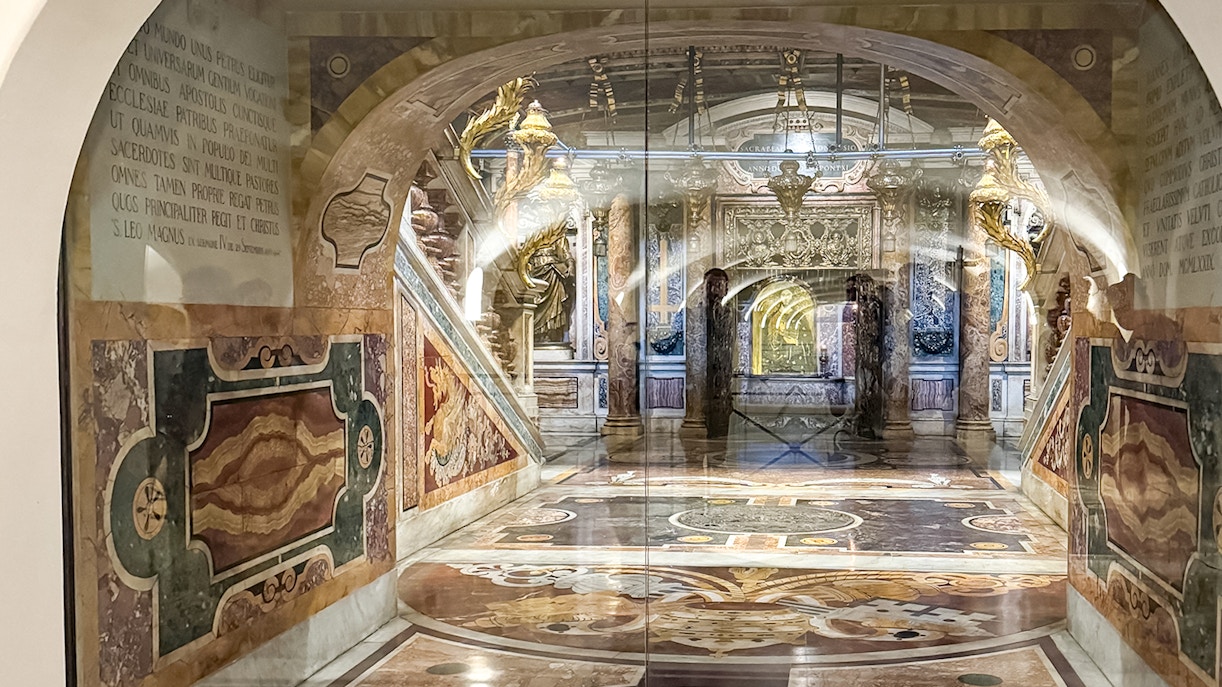
Clementine Chapel
1/10

Clementine Chapel

The main highlight of the Vatican Grottoes, the Clementine Chapel or the Chapel of St. Peter, contains the sepulcher containing the alleged remains of the Apostle Peter.

Chapel of the Madonna of Bocciata

Inside this chapel is a fresco of Madonna called ‘Madonna Della Bocciata,’ referring to her swollen face. An ancient legend says that her face bled after a drunk soldier threw a bowl at the fresco after losing a game.

Tomb of Pope John Paul II

Pope John Paul II's tomb, marked by a simple white marble slab, draws countless pilgrims. Moved to the St. Sebastian Chapel in 2011 after his beatification, it became a focal point for devotion.

Tomb of Queen Christina of Sweden

Next to the tomb of John Paul II is the tomb of Queen Christina of Sweden. Adorned with simple white marble and decorative corners, the tomb was constructed in the 20th century.

Tomb of Pope Pius XII

The Tomb of Pope Pius XII is a modest burial site in the Vatican Grottoes, marked by a marble slab with his name and dates. His papacy during World War II, including his diplomatic efforts and actions during the Holocaust, remains a topic of both praise and debate.

The Tomb of the Stuarts

On the left aisle lies the remains of the last few members of the royal Stuart family. Buried here are James III, Charles Edward and Cardinal Henry Benedict.

Chapel of St. Longinus

This chapel holds the tomb of St. Longinus, a Roman soldier who is believed to have pierced the body of Christ with a lance.

Empty Tomb for Benedict XVI

As morbid as it sounds, there is an empty tomb inside the Vatican Grottoes built for Pope Benedict XVI. At age 78, he was the oldest elected Pope, who served his Papacy from 2005 to 2013.

Tomb of Queen Charlotte of Cyprus

Built with white marble is the tomb of Queen Charlotte of Cyprus. The oldest and only surviving daughter of King John II and Helena Palaiologina, Charlotte served as Queen between 1458 and 1464.

Archeological Rooms

During the 16th century, Pope Paul V commissioned the extension of the Grottoes to include parts of the Old St. Peter’s Basilica. Inside the Grottoes are six archeological rooms with parts from the old Church including tombs, frescoes, and other structures.

Architectural & historical highlights

Vatican Grottoes

The Vatican Grottoes, built between 1590 and 1591, were originally designed to support the weight of St. Peter’s Basilica above. What started as underground vaults quickly became a sacred space, especially after Pope Clement VIII renovated part of the crypt in 1592 and created the Clementine Chapel, which now houses St. Peter's tomb.

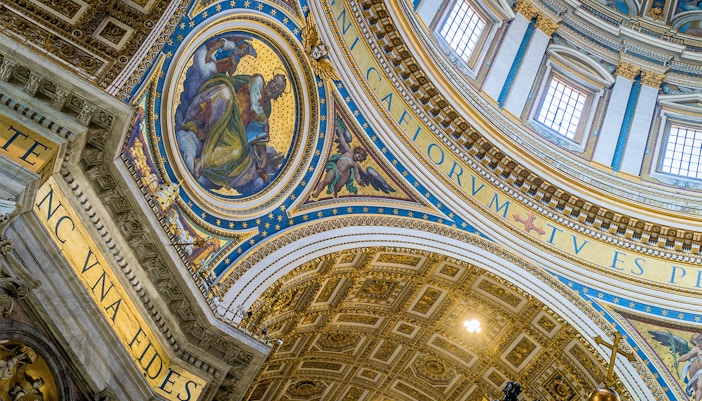
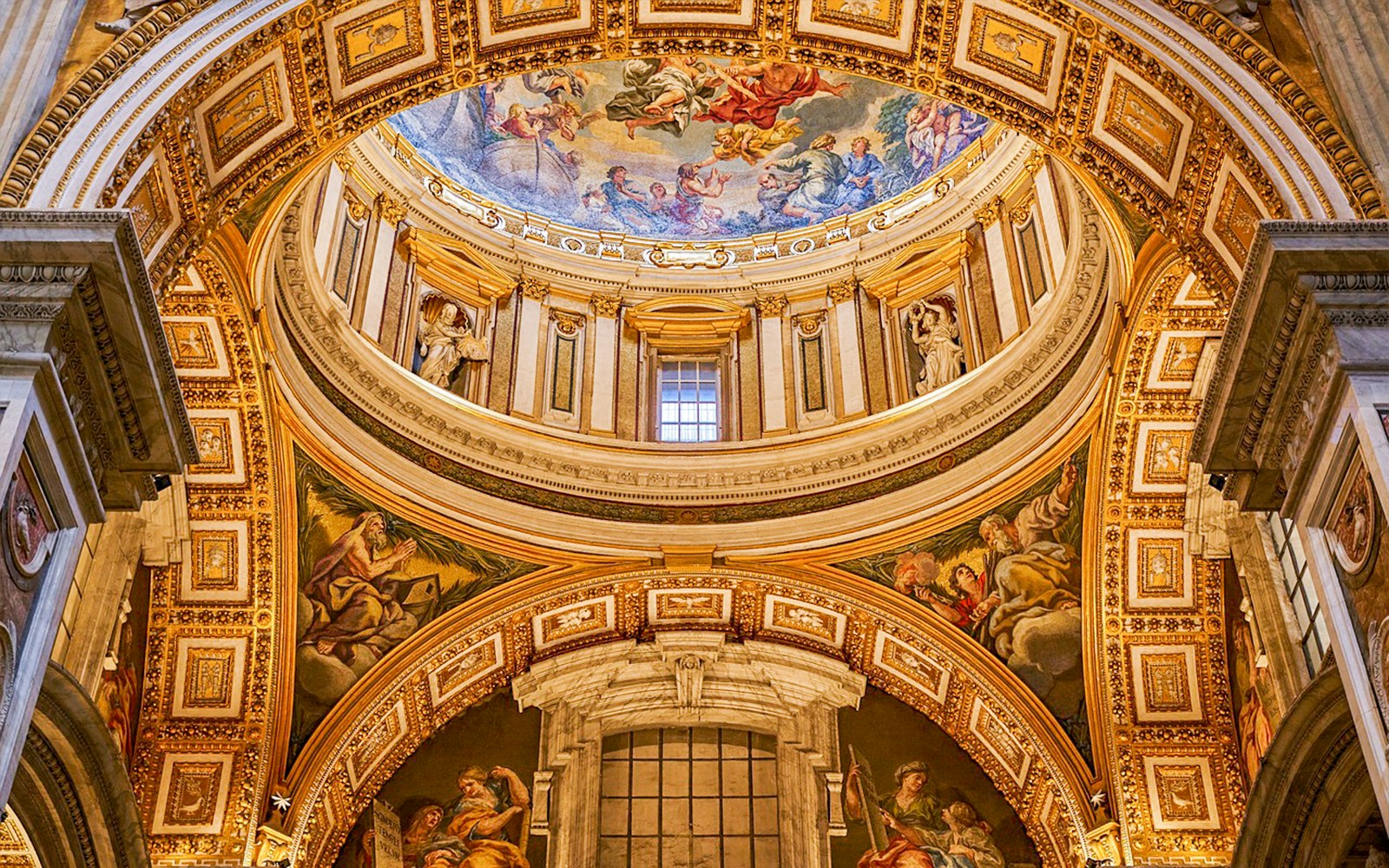
Architecturally, the Grottoes mix solid, sturdy construction with beauty, featuring vaulted ceilings and intricate chapels. Pope Paul V expanded them in the early 17th century, adding corridors and new spaces for prayer. Renowned architect Gian Lorenzo Bernini helped design many of the chapels, blending elegance with simplicity.

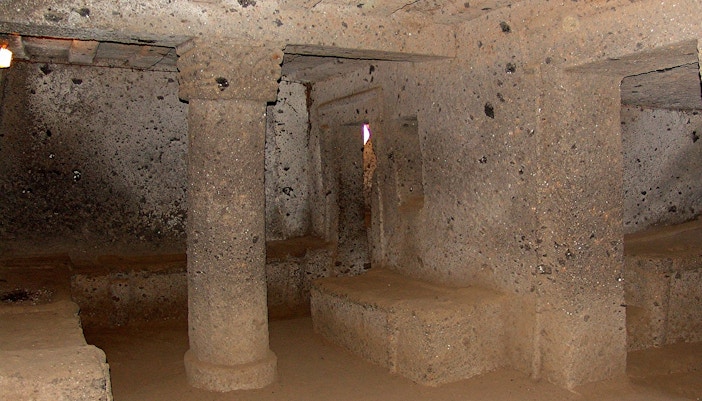
Today, the Grottoes house the tombs of Popes, saints, and other important figures. Visitors can also see relics from the original 4th-century basilica, all connected to the ancient Vatican Necropolis below.
Detailed history of St. Peter's Basilica

Visitor tips

Vatican Grottoes Visitor Tips
  • To avoid disturbing the peaceful environment of the Grottoes, please set your cell phone to silent mode. This helps preserve the quiet and contemplative nature of the visit for everyone.
  • To honor the sacredness of the site, wear clothing that covers shoulders and knees. 
  • For a deeper understanding of the history and significance of the Vatican Grottoes, consider joining a guided tour. Knowledgeable guides can provide valuable insights and enhance your overall experience.
  • To avoid having to wait in line again, it's best to visit the Grottoes after touring the rest of St. Peter’s Basilica. This will streamline your visit and allow you to make the most of your time.
  • The Vatican Grottoes house numerous fascinating sites and artifacts, which means you'll be on your feet quite a bit. To make your visit more comfortable, be sure to wear shoes that are easy to walk in.
Plan your visit to St. Peter's Basilica

Frequently asked questions about the Vatican Grottoes

Yes, the Vatican Grottoes are open to all visitors. However, they are located within St. Peter’s Basilica, so access is included with your general admission to the Basilica. Be sure to dress appropriately as modest attire is required in all Vatican locations.

More Reads

Old St. Peter's Basilica

Book Now

Vatican Necropolis

Book Now

St. Peter's Tomb

Book Now